 Twyla (12) was born with Congenital Disorders of Glycosylation (CDG), an inherited metabolic condition that affects all parts of the body. In Twyla’s case, it has affected her brain, so she suffers uncontrollable seizures. Twyla is a very happy little girl. She goes to school full-time but has to have three full-time carers accompany her to school because she can’t go unassisted. Twyla needs 24-hour-a-day care because of her seizures. She loves music, she loves stories, she loves playing messy play and painting.
It is often the case for many families such as Twlya’s, that regular hospital visits are a common occurrence, particularly in the early days of a diagnosis. The need for hospital visits causes stress and severely disrupts family life.
“When Twyla was younger, she used to suffer a lot of apnea seizures, so we spent a long time in the hospital before we were able to get better control of them. One of the times we were in hospital for about a month, and when they couldn’t work out how to stop the seizures, we were transferred to Great Ormond Street” says Neville, Twyla’s dad.
Mum Charlene told us, “I was working full-time and Neville was Twyla’s full-time carer because, at that time, we didn’t have any care available to us. Neville spent most of the time with Twyla in the hospital and on the weekends I would go to the hospital to take over from Neville so that he could go home and rest. But we didn’t know how long Twyla was going to need to be there. It was a really hard time; we even had to close our business as we couldn’t leave the hospital because she could have a seizure at any moment. It was really difficult.”
The family receives care and support from the Children’s Hospice at Home Service that The Pepper Foundation funds. When the family lost their full-time care assistant in 2022 the Children’s Hospice at Home service provided care, respite and play sessions for the family.
Neville explains “the children’s service would visit us, providing play sessions for Twyla, giving Charlene and me two hours to get on with what we needed to do or even take a break. The children’s service provides play sessions during school holidays, which Twyla loves. Then every month to six weeks the nursing team provides respite care allowing Charlene and myself a date night, which is important for us because the stress we’re under with Twyla has a massive impact on our relationship. Being afforded a few hours every couple of weeks to go and be ourselves, not be the medical parents all the time, it’s great. It helps with mental health, it helps with our relationship, and just gives us some breathing space.”
“the children’s service would visit us, providing play sessions for Twyla, giving Charlene and me two hours to get on with what we needed to do or even take a break. The children’s service provides play sessions during school holidays, which Twyla loves.”
Sarah, who is a Children’s Nurse, has been working with the family since Twyla was very young.
“I think Twyla was maybe 10 or 11 months old when we were first introduced to the Children’s Hospice at Home Service and the Pepper Foundation. Sarah knows Twyla so well, we fully trust her when we go out and that if there are any issues that Twyla will be well looked after. The service also provides telephone support as well, which is really comforting. When there have been problems the children’s service phone us back straight away and provide assistance. It’s nice to know that there’s always someone you can call when you need advice when the GP is closed. That Sarah and the others at the service know Twyla and understand her condition, it’s vitally important. If you have to phone a medical call centre and they don’t know your situation, it can be difficult to get the correct advice in a timely manner. The children’s service has also been great at putting us in touch with other hospices and services, which was a godsend.”
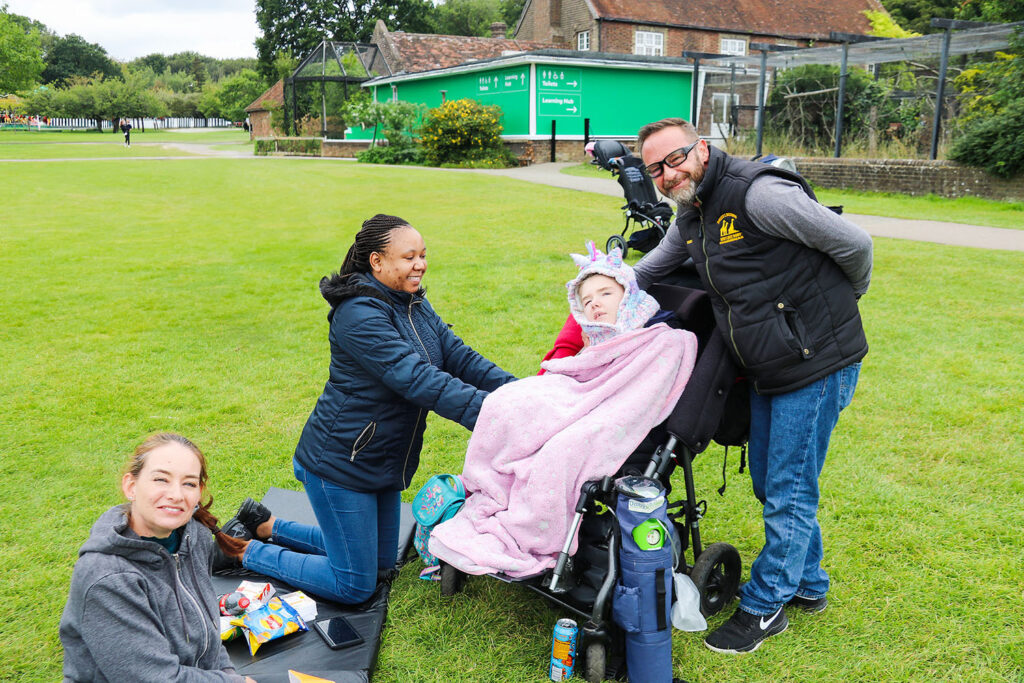
[Twyla, Neville, Charlene, and a carer at a Pepper day out]